
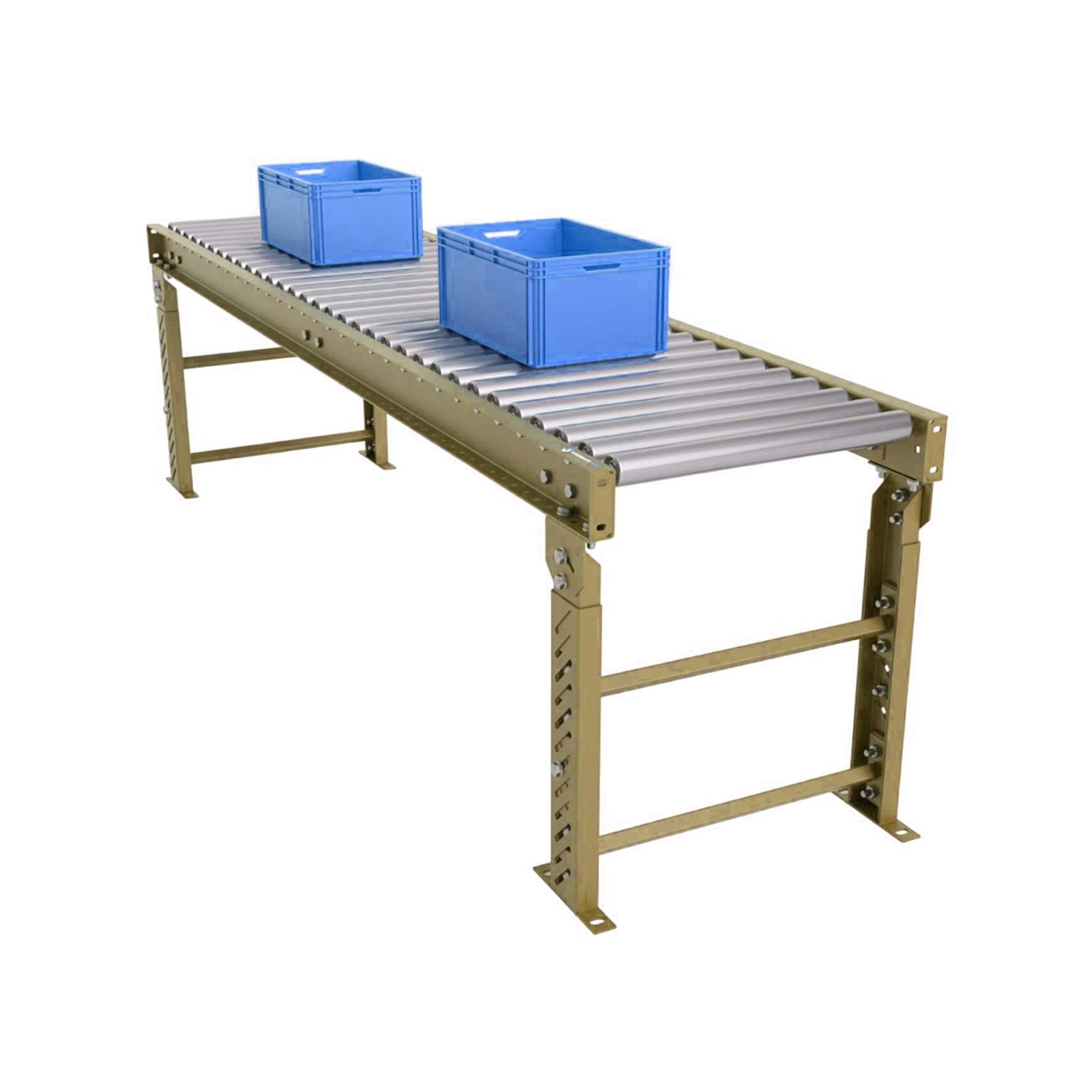

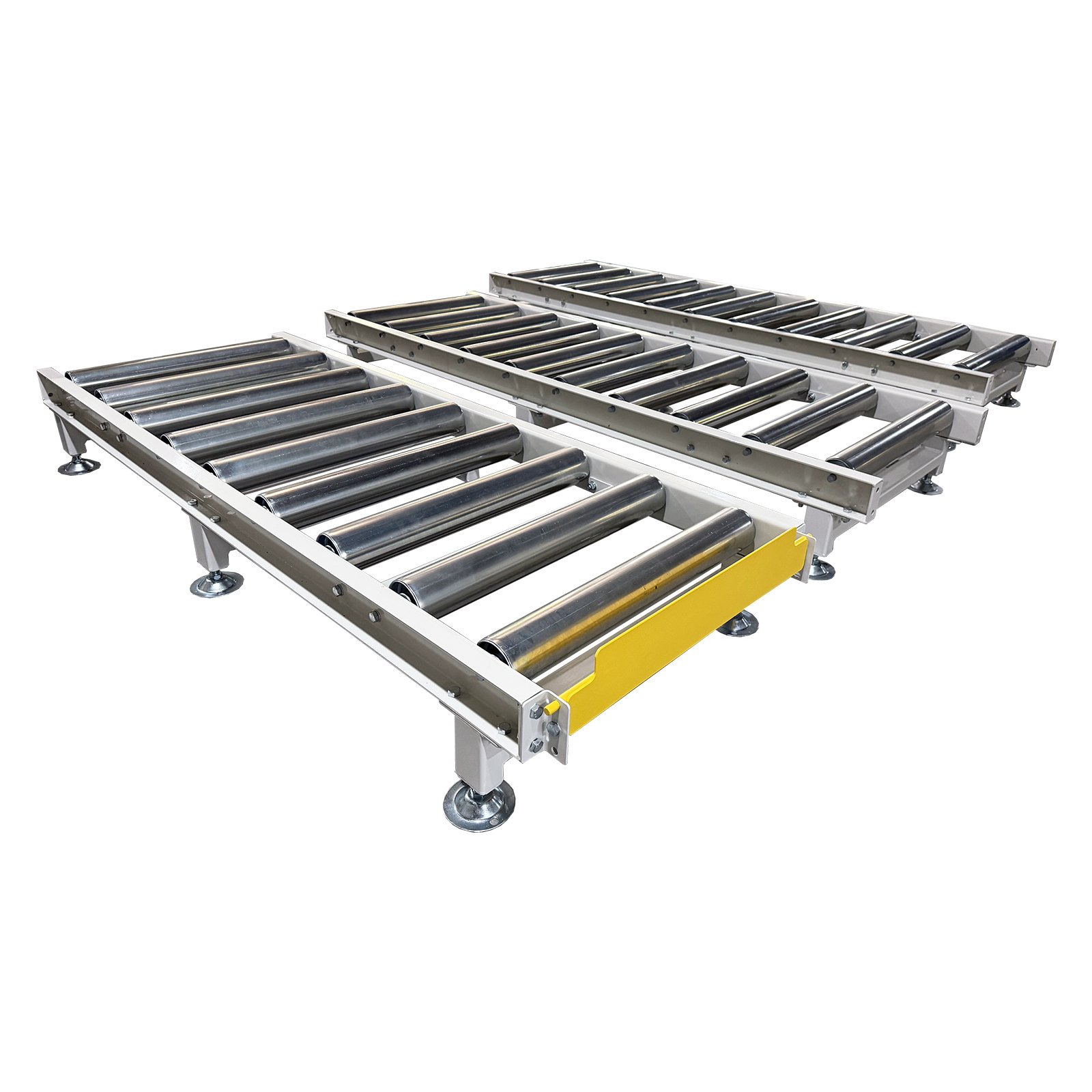
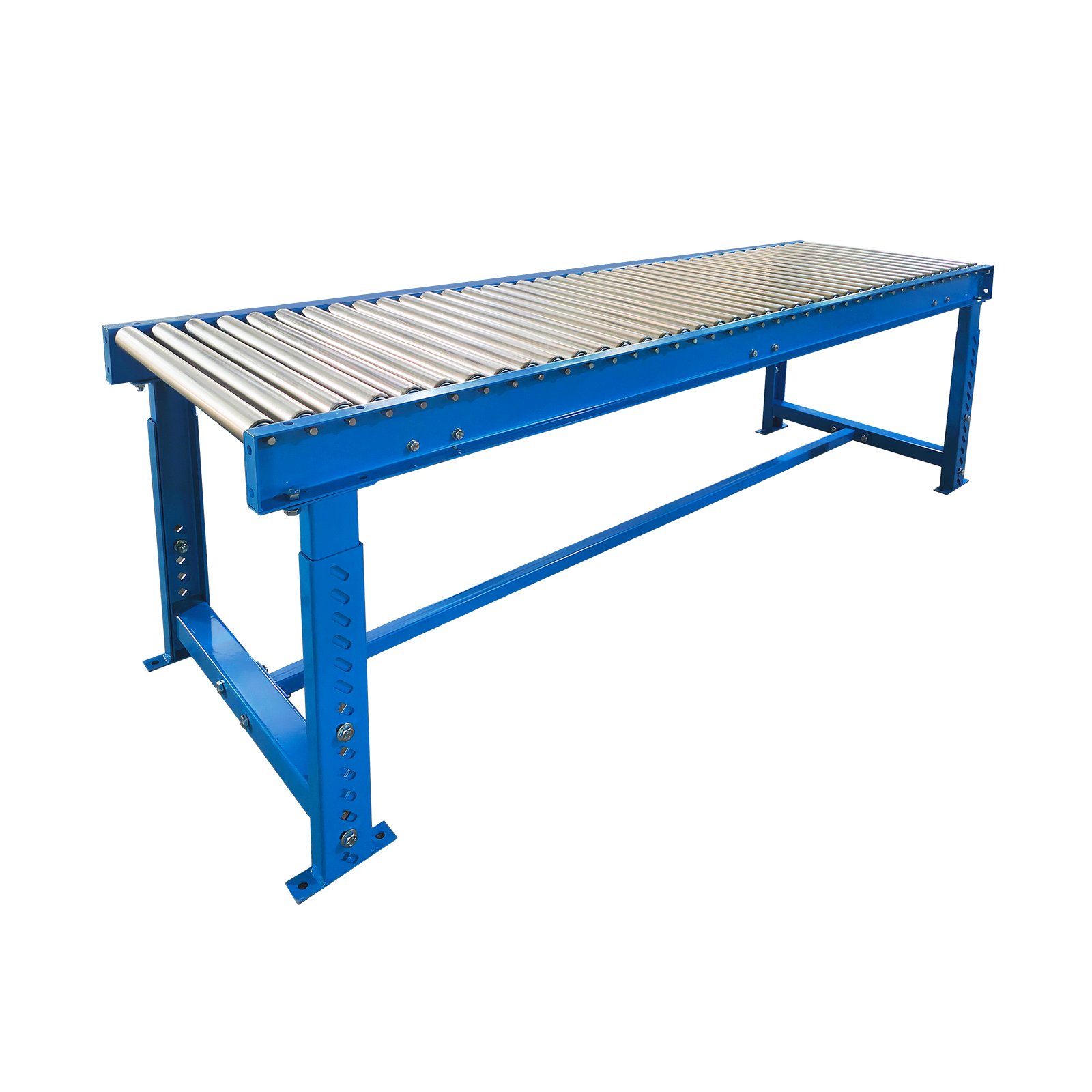
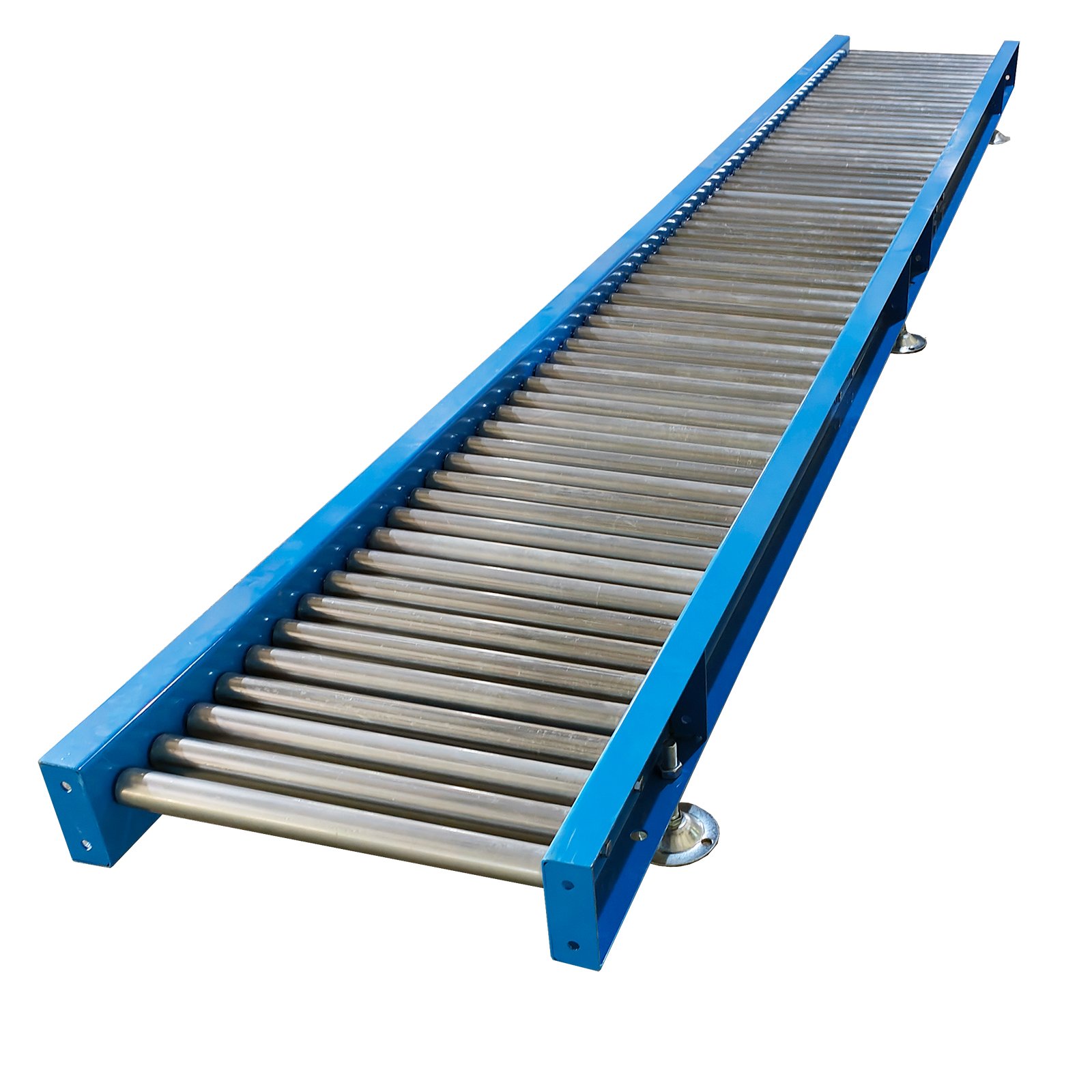
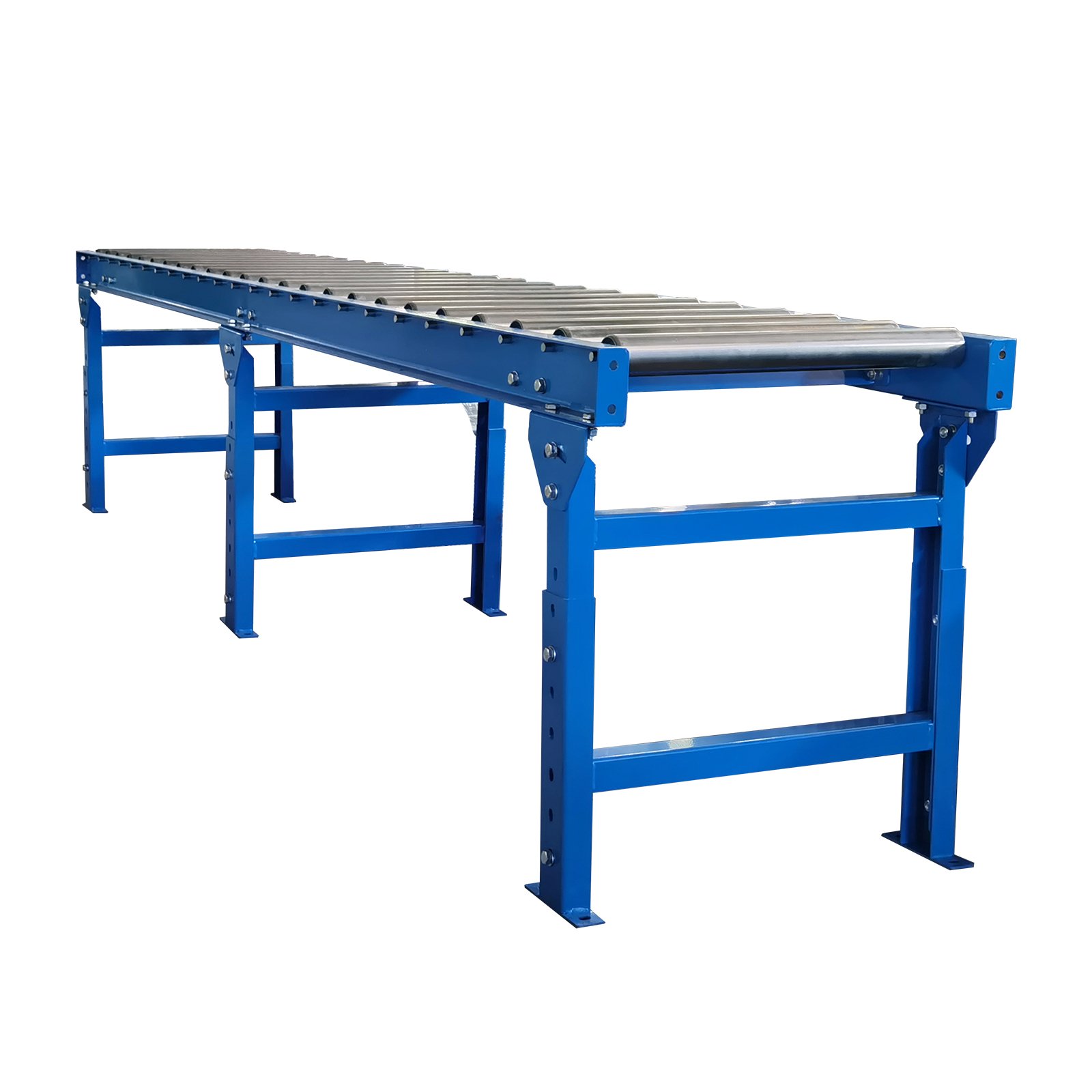
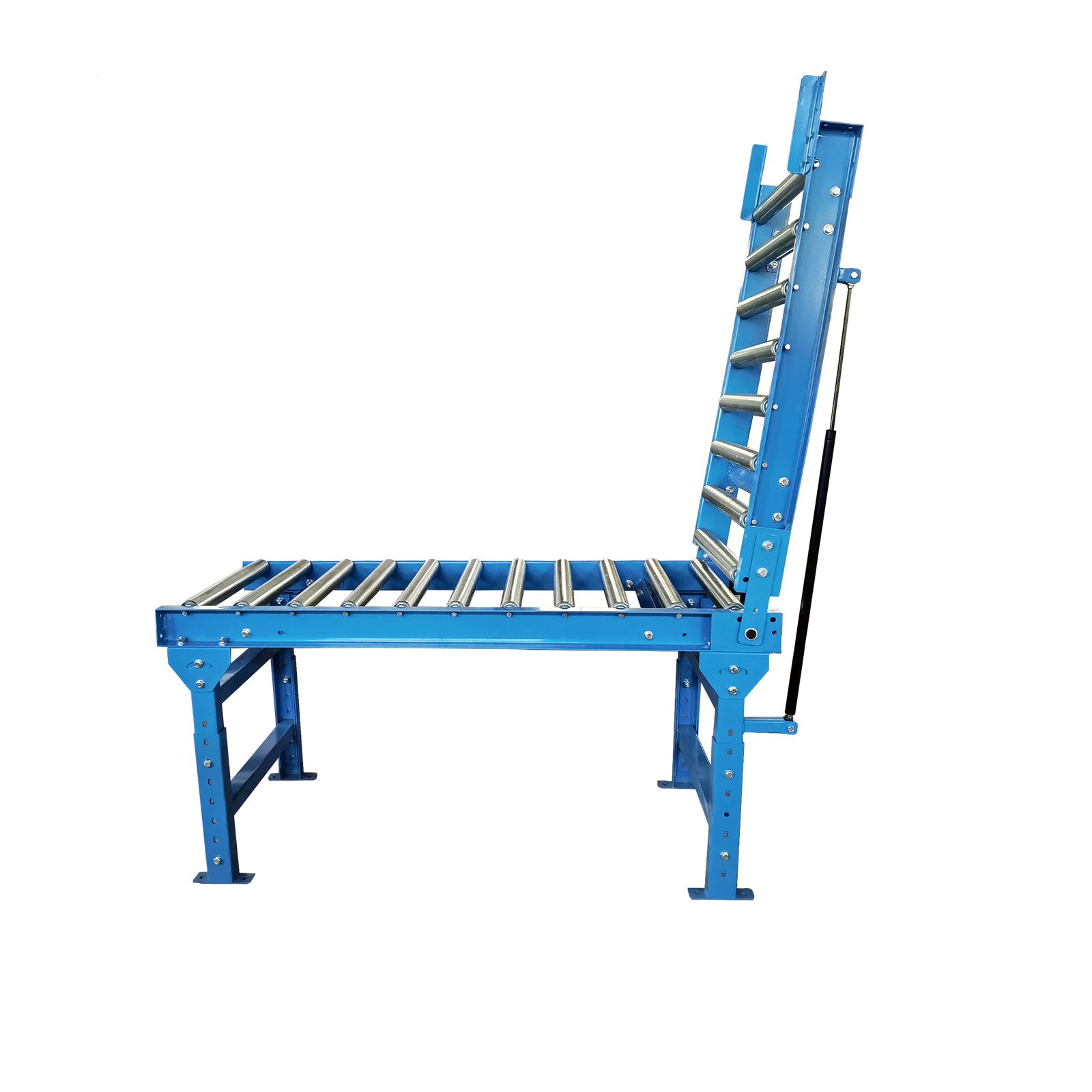
Light medium Duty Gravity Roller Conveyor
•Energy-efficient, low operating cost, and reliable.
•Low maintenance, easy to install and reconfigure.
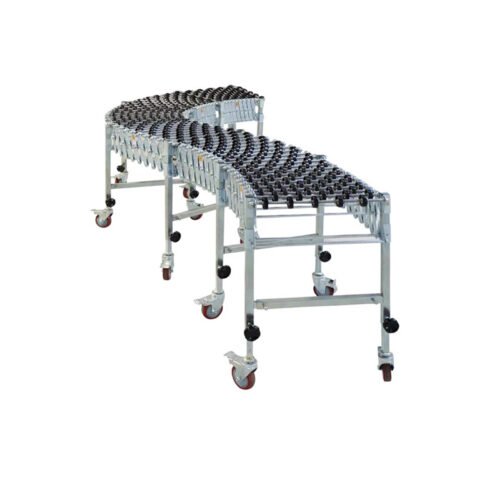
•Standard straight, curved, and merge sections can be combined into various layouts.
•Can be used for transportation, accumulation, sorting, and staging.

(+86) 13186966668 Start Live Chat
Description
General
Gravity roller conveyors are a fundamental and cost-effective material handling solution, utilizing the natural force of gravity to move items with minimal manual effort. They are widely used in warehouses, distribution centers, manufacturing, and packaging lines for transporting boxes, totes, and other items with a rigid, flat bottom.The simplicity and reliability of these conveyors make them an easy choice to move large quantities of materials throughout any facility. Assemble your system using a combination of straight & curved sections and fine-tune it with accessories like rails & guards.
Our gravity roller conveyor series offers a versatile, economical solution for moving unit loads. From light-duty plastic rollers for quiet operation to heavy-duty steel rollers for pallet handling, our modular design allows for custom layouts. Features include adjustable stands for speed control, corrosion-resistant finishes, and high-impact rollers. Perfect for creating efficient flow in warehouses, docks, and assembly areas without the need for electricity.
Specification
| Conveyor Length | 1 m-100 m |
| Effective Width | 100-1000 mm |
| Height | 100-1000mm |
| Roller Diameter | 38mm,50mm,60mm,76mm,89 mm |
| Roller Material | Zinc plated steel, stainless steel 304/201,ABS,PVC |
| Frame Material | Steel,Aluminum,Stainless Steel |
| Load Capacity | 50-1000kg/m |
How to choose a Gravity Roller Conveyor for your business?
Gravity roller conveyors offer a cost-effective, flexible, and efficient solution for moving products and materials in a wide range of industrial and commercial settings. To ensure optimal performance , it’s important to select a conveyor system that aligns with your specific operational needs. Below are key factors to consider during the selection process.
1. Determine Your Application Requirements
Begin by defining the primary use case—whether for warehousing, manufacturing assembly lines, packing stations, or distribution centers. Consider the type, size, weight, and bottom surface of the items being conveyed. This will influence decisions on roller type, load capacity, and frame design.
2. Select the Appropriate Roller Type and Material
Rollers are available in various materials, each suited to different conditions:
Steel : Ideal for heavy loads and durable, general-purpose use.
Nylon : Lightweight, corrosion-resistant, and quieter operation.
Rubber or Polyurethane : Provides better grip and cushioning, protects delicate surfaces, and reduces noise. Suitable for washdown or corrosive environments.
Choose based on product weight, surface sensitivity, noise restrictions, and exposure to moisture, chemicals, or temperature variations.
3. Configure Frame Width and Roller Pitch
Frame Width : Should accommodate the widest product or package, with a small clearance on each side to prevent jamming.
Roller Pitch (distance between rollers): Closer pitch is recommended for smaller or unstable items to ensure smooth transit. Standard pitches are suitable for most uniform cartons or rigid products.
4. Consider Support Structure and Height
Support stands can be fixed or adjustable in height. Adjustable stands offer versatility for multi-level operations or uneven floors. Ensure the support height matches the ergonomic and workflow needs of your facility, such as compatibility with workstations, packaging tables, or other equipment.
5. Plan for Layout and Scalability
Conveyor frames typically come in standard lengths and can be easily joined to create extended runs. This modularity allows for future reconfiguration or expansion as your business grows. Consider layout flexibility, curves, gates, or stops if needed for process flow control.
6. Evaluate Environmental and Safety Factors
If the conveyor will be used in food processing, pharmaceuticals, or other regulated industries, ensure materials meet hygiene standards and can withstand frequent cleaning. Include safety features such as guards or roller brakes if necessary.
By carefully assessing these factors—roller material, frame width, roller pitch, support type, and environmental conditions—you can tailor a gravity roller conveyor system that enhances efficiency, preserves product quality, and adapts to your evolving operational demands.



Reviews
There are no reviews yet.