Find the Right Conveyor Solution to Optimize Your Warehouse Efficiency

Find the Right Conveyor Solution to Optimize Your Warehouse Efficiency

Buying Guide: Choose the Ideal Conveyor System to Elevate Your Warehouse Efficiency

With peak selling season coming up, this guide will help you pick better conveyor equipment to boost efficiency for packaging, logistics, warehousing and manufacturing businesses.
Conveyors are far from a brand-new invention. Their basic forms were already used to build ancient wonders like the Egyptian Pyramids and Stonehenge. Yet they are more vital to today’s companies than ever. As customers expect faster shipping and profit margins keep shrinking, efficient conveyor systems are essential to keep your business profitable.
Packing, shipping, warehousing and manufacturing industries are swamped with more orders and frequent stock transfers. Conveyors act as reliable workhorses inside your factory or warehouse, moving incoming and outgoing goods quickly and steadily.
 

Conveyors: A Thriving Global Industry


Globally, the conveyor solutions market holds considerable economic scale and is anticipated to witness meaningful expansion in the foreseeable future alongside stable year-on-year compound growth. This prominent market uptick originates from the growing adoption of automation throughout various industrial verticals, and the primary strengths that conveyor systems offer are undeniably substantial and impactful:

1. Boost Your Work Efficiency

Moving goods by hand wastes plenty of time and manpower. Conveyors speed up the transport of products and materials, and industry research proves they can raise warehouse work efficiency by up to 30%.
 

2. Create a Safer Workplace

Workers often get hurt from repeatedly lifting heavy goods. Statistics show nearly one third of workplace injuries happen due to tiring manual handling. Conveyors avoid this heavy physical work with ergonomic designs and greatly cut work-related accidents.
 

3. Simplify Work & Reduce Mistakes

Conveyors keep goods flowing steadily in your warehouse. One logistics warehouse shortened order processing time by 50% and increased handling capacity by 40% after installing conveyors. Less manual work means fewer mistakes, helping you save costs and offer more reliable service to clients.
 

Extra Advantages of Conveyor Systems

  • Save on labor costs:You won’t need as many workers to move goods, which greatly cuts your overhead. According to CEMA, large warehouses can save a great deal on labor every year with conveyors.
  • Reduced Downtime:With basic regular maintenance, conveyors run consistently without frequent pauses, keeping your work going smoothly.
  • Heavy Load Capacity:Whether gravity-driven, motorized or heavy-duty models, these conveyors can carry items of all different weights for industrial use.
  • Faster stock handling with fewer errors:Conveyors move goods much quicker than manual work and reduce mistakes during order picking and sorting.
  • Optimal Space Utilization:They take advantage of vertical space and fixed transport paths, letting you fully utilize your limited warehouse floor area.
  • Reduced Product Damage:Properly designed conveyors stop products from getting scratched or broken during moving. Studies show they far outperform manual handling in cutting product damage.
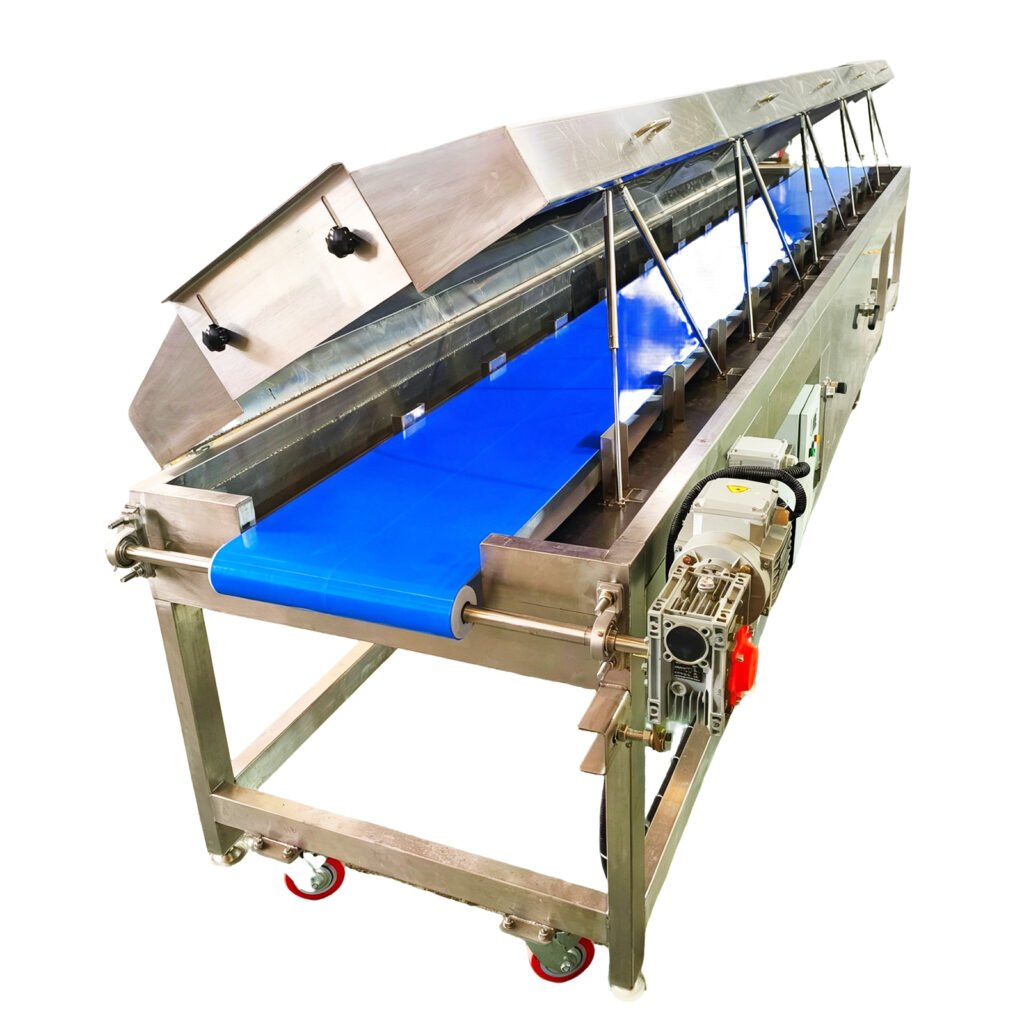
  • Meet strict hygiene standards:We can customize conveyors to satisfy strict cleanliness rules, ideal for food production and other industries with high sanitation demands.

Here are key things to keep in mind when picking a suitable conveyor for your site:

•The Kinds of Items Being Moves:Take into account how heavy, big, oddly shaped or delicate your products are.
•Processing quantity & running speed:Work out how many goods you need to move daily, then pick a conveyor with a matching speed.
•On-site space:Measure your workshop layout clearly and note any space limits.
•Fit with your existing setup:Make sure the new conveyor works with your existing machines and workflows. Our team can give professional advice for this part.
•Budget planning:Calculate two main expenses: upfront fees for the machine and installation, plus ongoing daily running and maintenance costs.

THE DIFFERENT TYPES OF CONVEYORS AVAILABLE

There is a wide range of conveyor models for you to pick from. Below is a simple breakdown of each type and their differences.

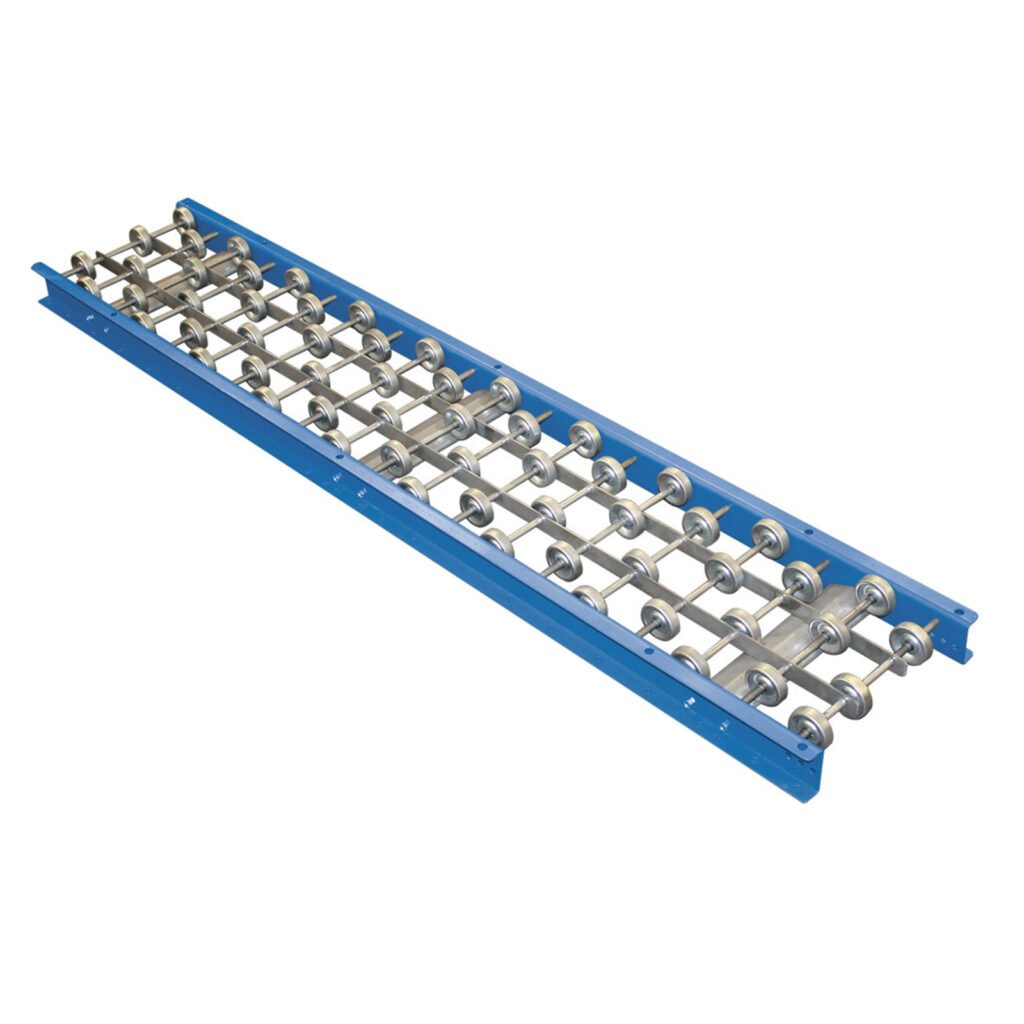
SKATE WHEEL CONVEYORS

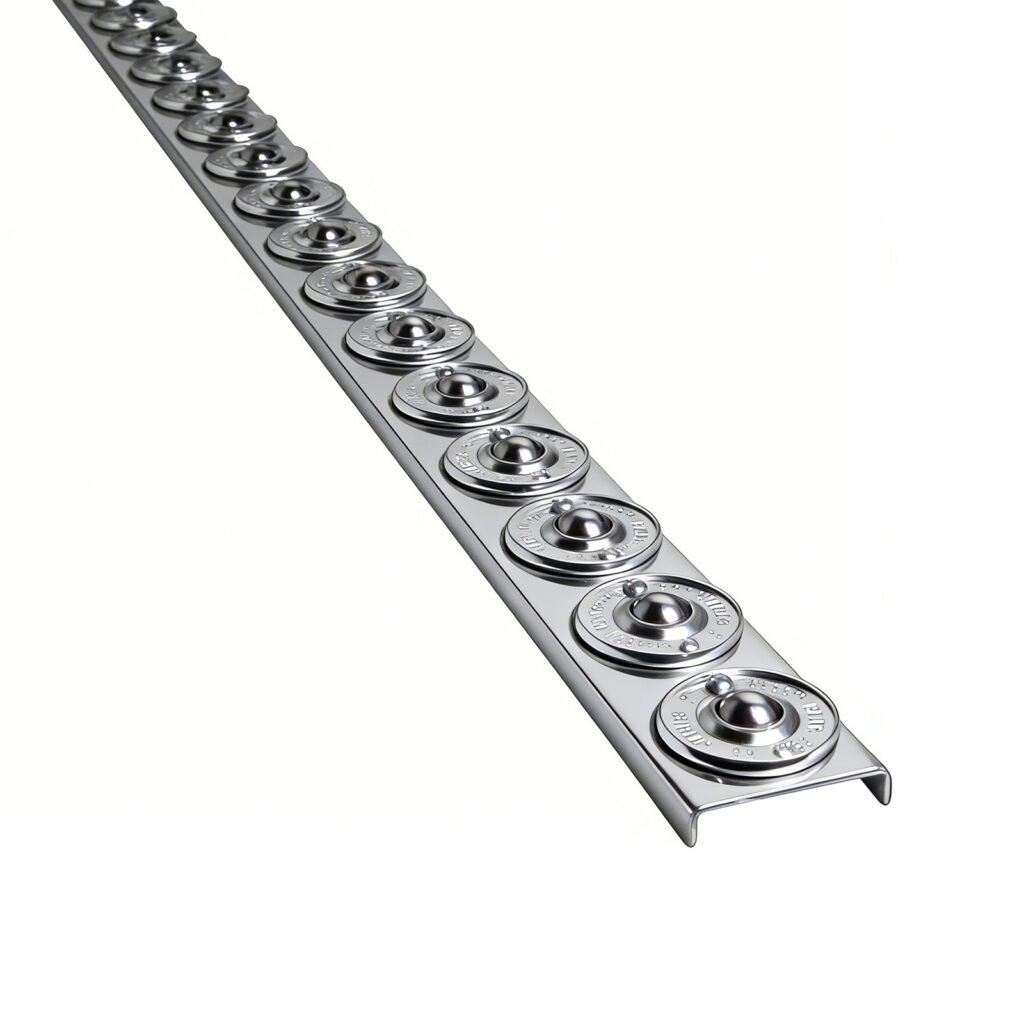
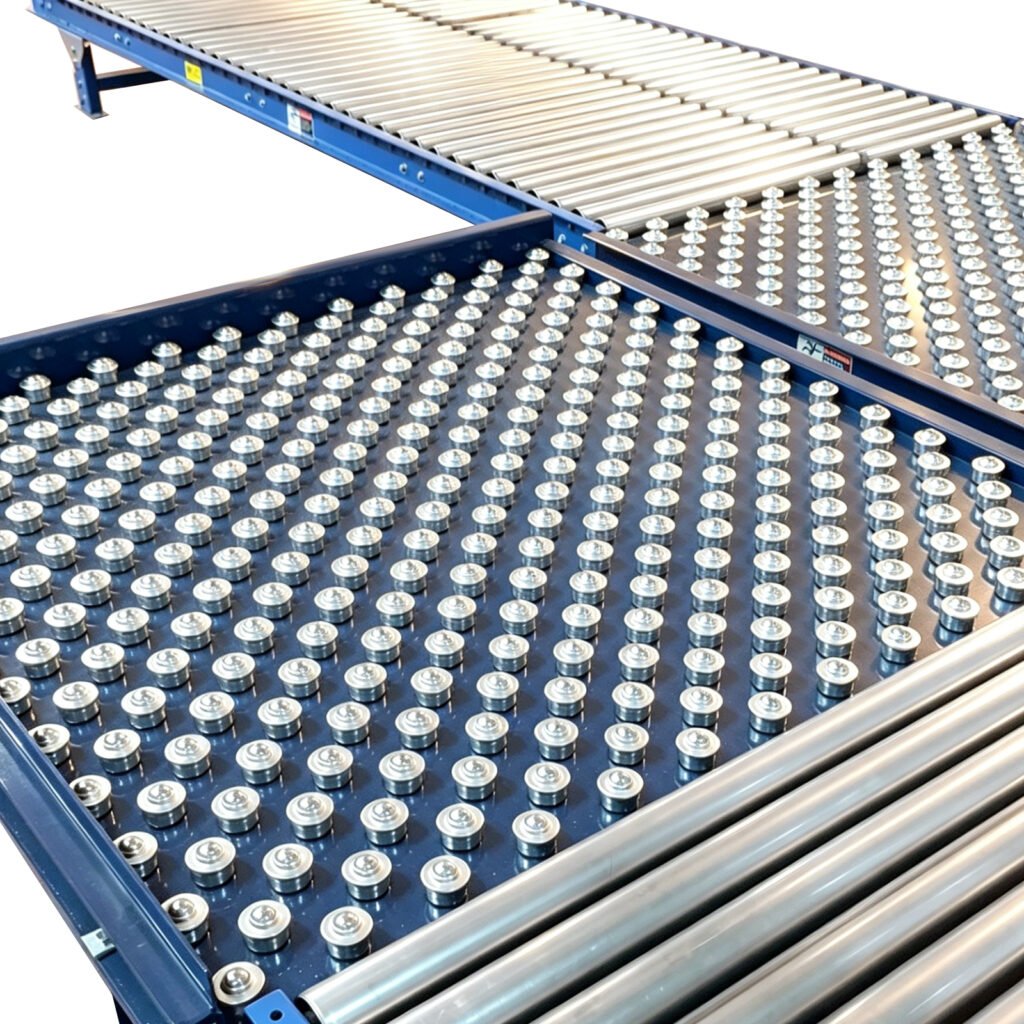
This widely used conveyor is fitted with rows of small rotating skate wheels fixed on a metal frame. Goods slide easily across these wheels, and it’s ideal for these scenarios:
•Transporting light goods like cartons, pallets and other flat-bottom packages.
•Sliding items downhill by gravity, or being manually pushed forward.
•Quick layout adjustments, perfect for temporary work zones or frequently modified production lines.

FIXED/RIGID SKATE WHEEL CONVEYORS:
These conveyors are fixed in place and are designed to handle lightweight items efficiently. They’re often used in packaging and shipping environments where flexibility in layout is not a requirement. Skate wheel conveyors are particularly well-suited for distribution centers, warehouses, and other consistent commercial material handling environments.

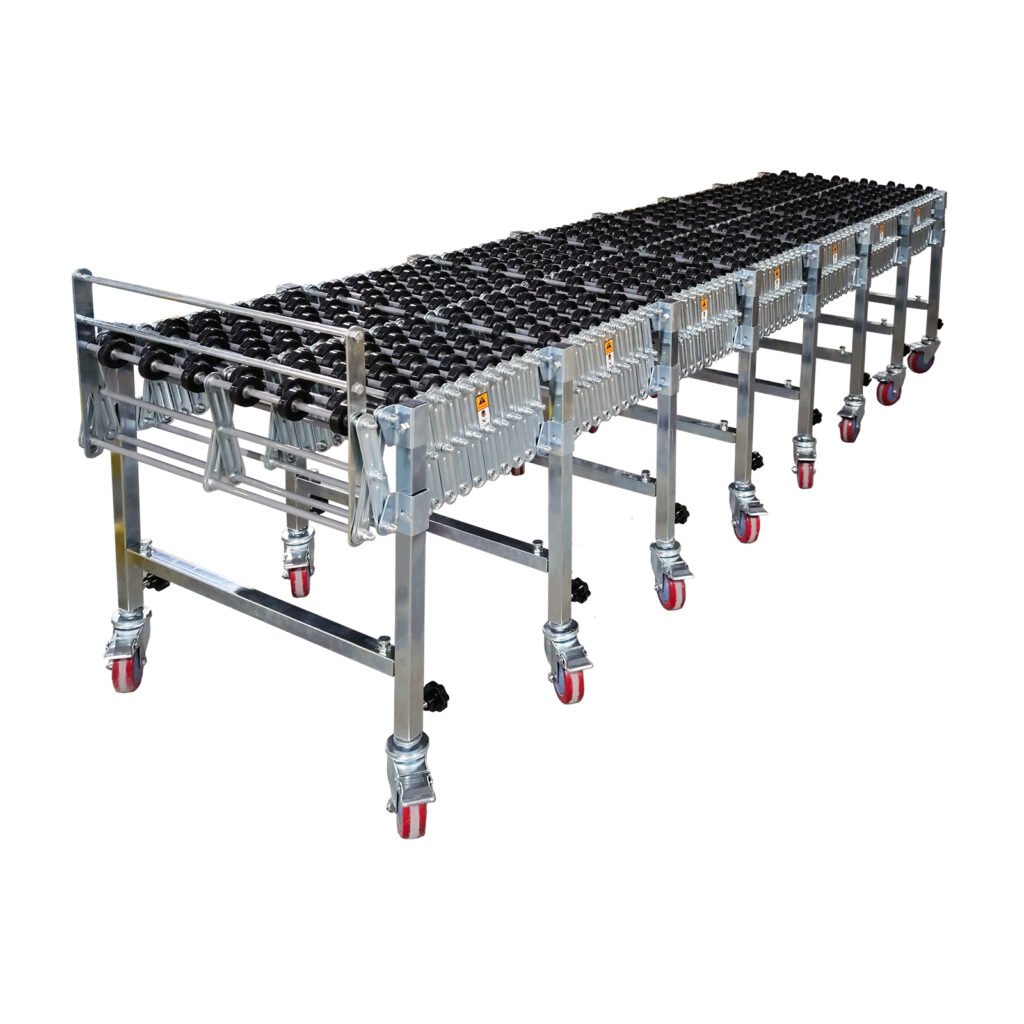
FLEXIBLE/EXPANDABLE SKATE WHEEL CONVEYORS:
If you require more flexibility for your conveyor set-up, these conveyors offer much more latitude with various layouts, allowing them to be extended or retracted as needed. This makes them the perfect choice for either temporary or constantly changing workspaces.

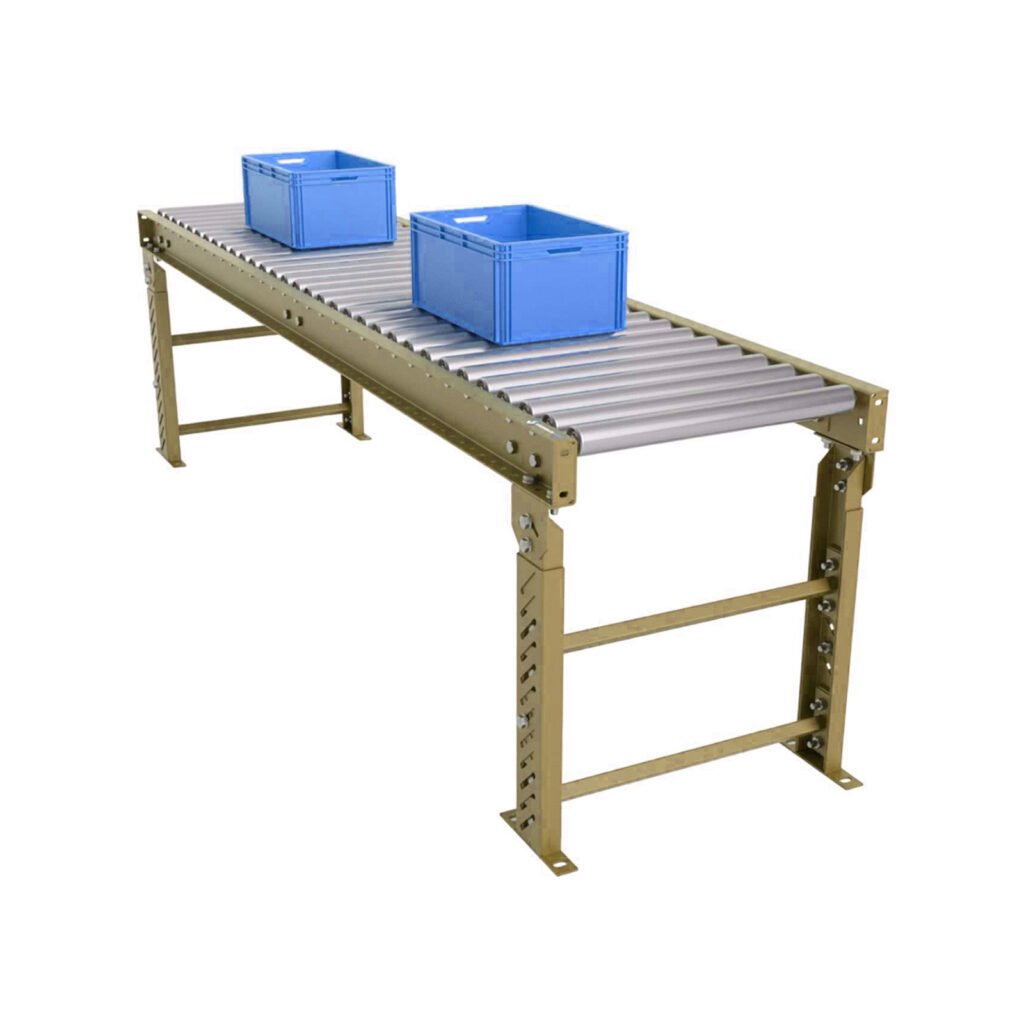
ROLLER CONVEYORS

Roller conveyors excel at transporting heavy loads. Built tough to bear large weights, they are widely used across industrial settings. This conveyor is assembled with multiple rollers fitted onto a frame, letting goods roll forward effortlessly.They are comprised of the following components:
•Rotatable cylindrical rollers
Available in steel, aluminum or plastic to match different working conditions, enabling smooth movement of goods.
•Heavy-duty metal frame
Secures all rollers firmly and keeps the whole conveyor structure stable and intact.
•Built-in roller bearings
Cut down friction so rollers spin freely, ensuring materials are conveyed steadily and efficiently.
•Optional driving system
Some versions use a motor to drive rollers actively; gravity roller conveyors rely on gravitational pull to move items without extra power.
We offer various styles of roller conveyors for your choice:

FIXED GRAVITY ROLLER CONVEYORS:
Just like gravity skate wheel conveyors (see above), these conveyors use gravity to move items. They’re perfect for downhill movements and are most often used in shipping and receiving areas.

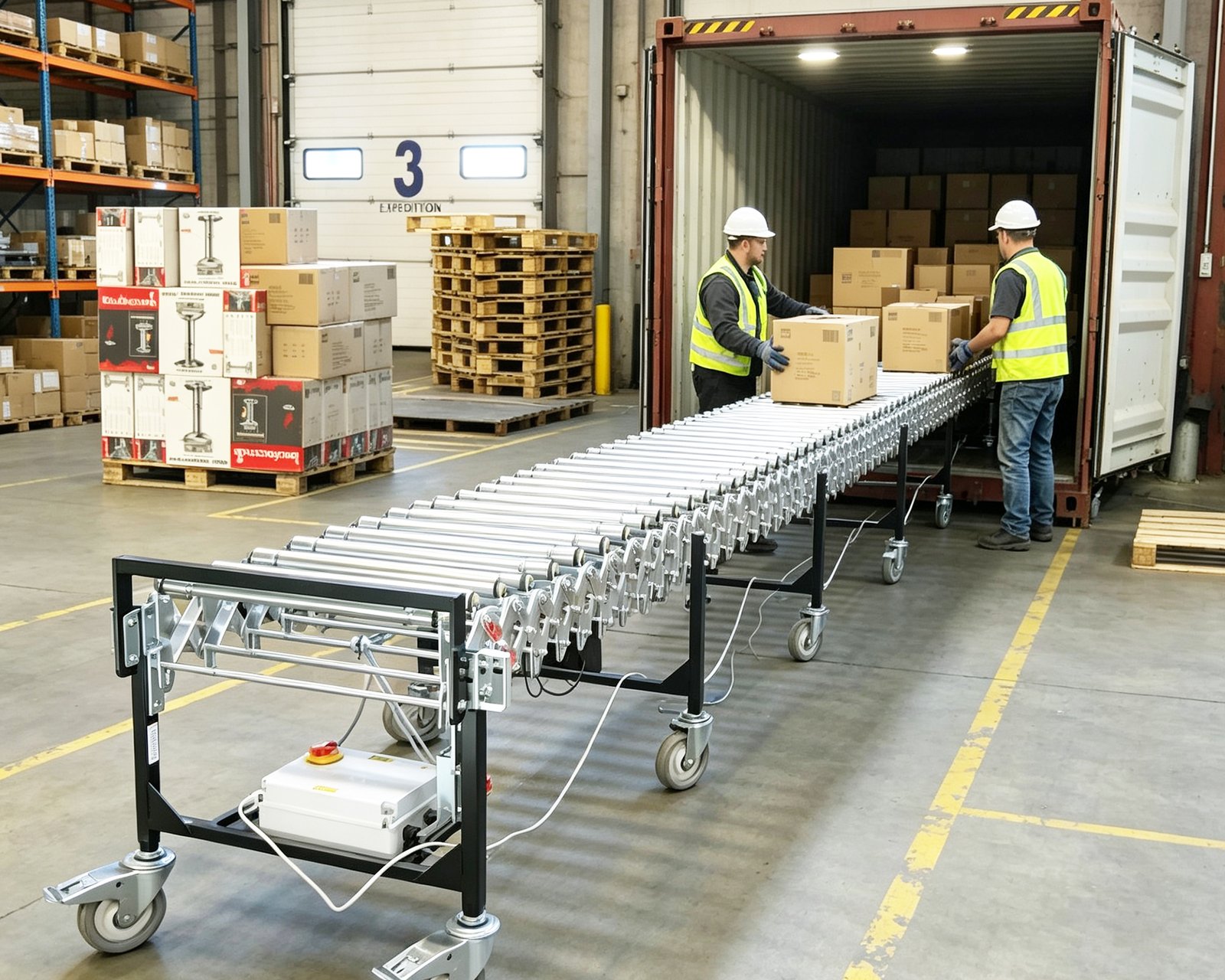
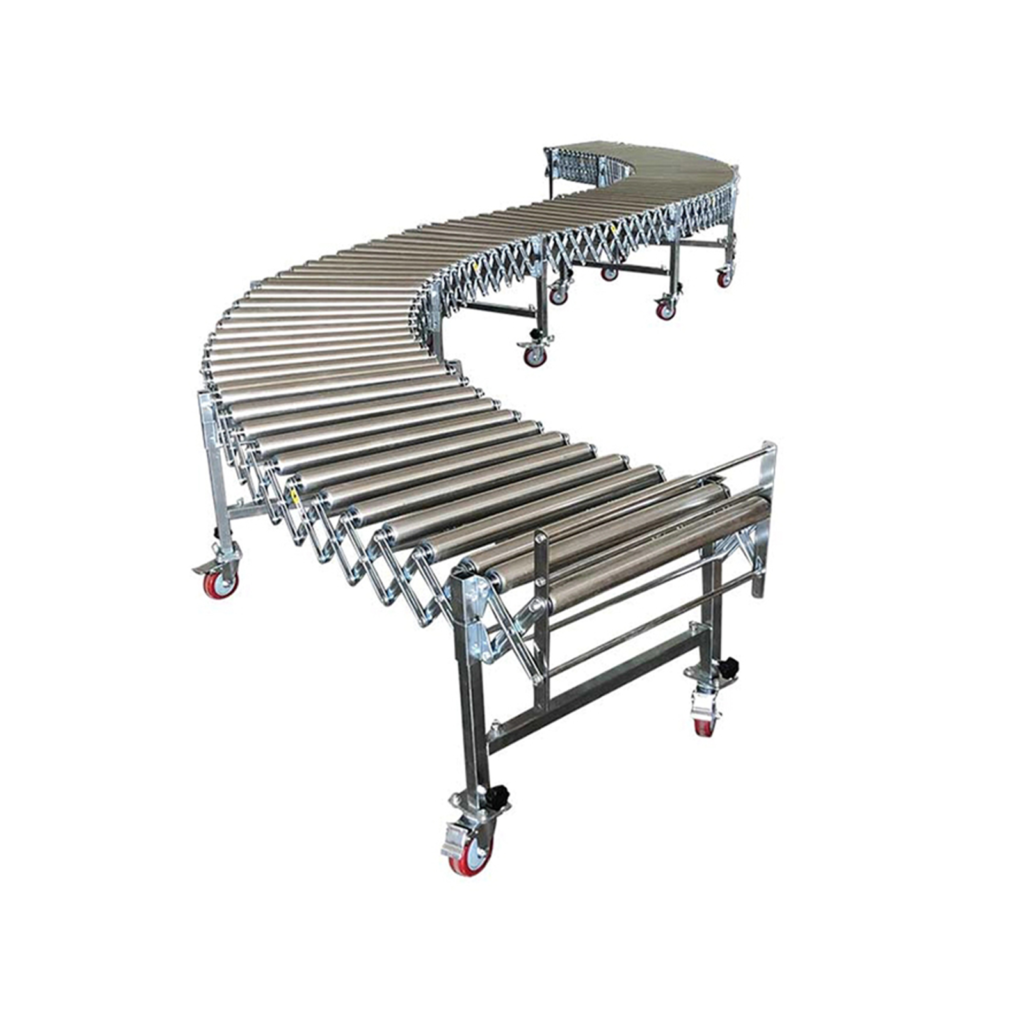
FLEXIBLE/EXPANDABLE ROLLER CONVEYORS: This conveyor can be stretched longer or folded shorter freely to fit your site layout. You can bend and turn it to go around corners or adjust its length  to match  work zones or changing production lines.Simply pull it out for use and push it together to save storage space when not required. It is a practical pick for loading, unloading, sorting and flexible material transportation

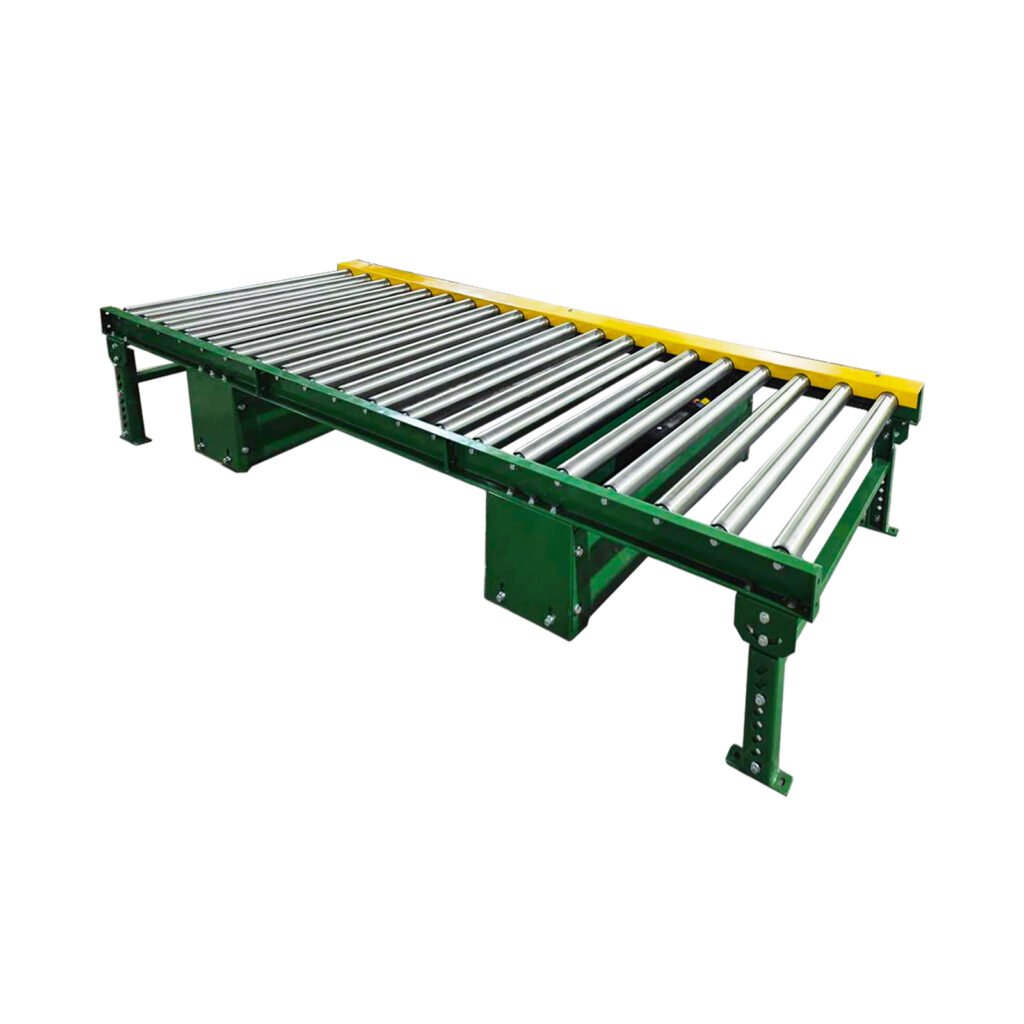
FIXED MOTORIZED ROLLER CONVEYORS:
These motor-powered roller conveyors are built as a fixed, stationary structure. Driven by  motor, they automatically push goods forward steadily without relying on gravity or manual pushing.With a solid  frame and durable rollers, they support heavy items and deliver consistent, long-lasting operation. Perfect for permanent assembly lines, warehouse transit and fixed production workflows where stable, continuous automatic conveying is needed. They require minimal manual work and greatly boost your overall handling efficiency.

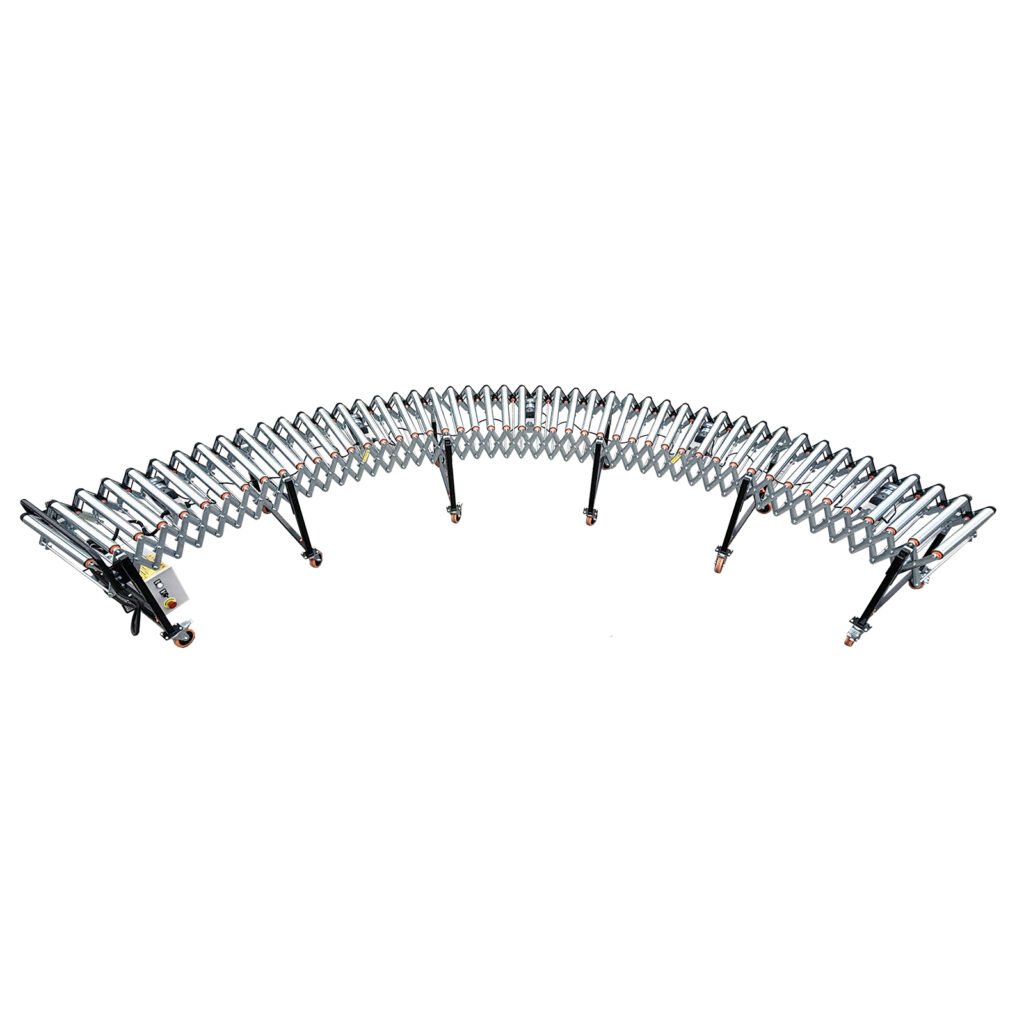
POWERED FLEXIBLE/EXPANDABLE ROLLER CONVEYORS:
This conveyor combines automatic power delivery with flexible layout adjustment.You can freely extend and curve the conveyor to adapt to different working areas.Powered by an electric motor, it automatically transports goods without manual pushing or gravity assistance.Easy to deploy on loading docks, temporary sorting lines and frequently rearranged workshops. It can be compacted for space-saving storage when not in use, bringing both automatic conveying efficiency and great layout flexibility.

BELT CONVEYORS

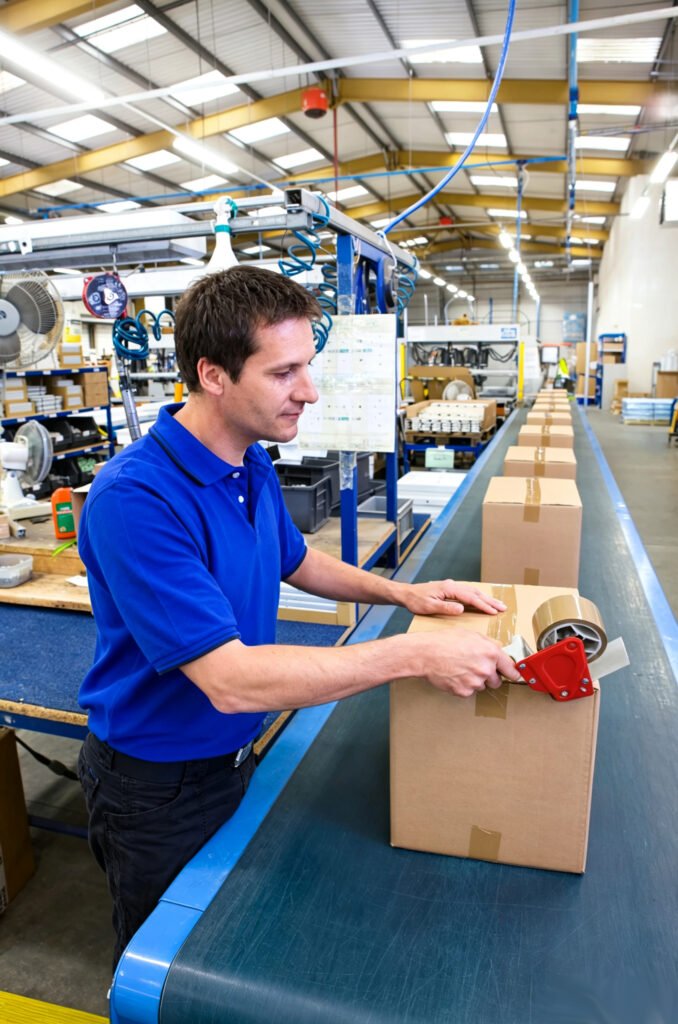
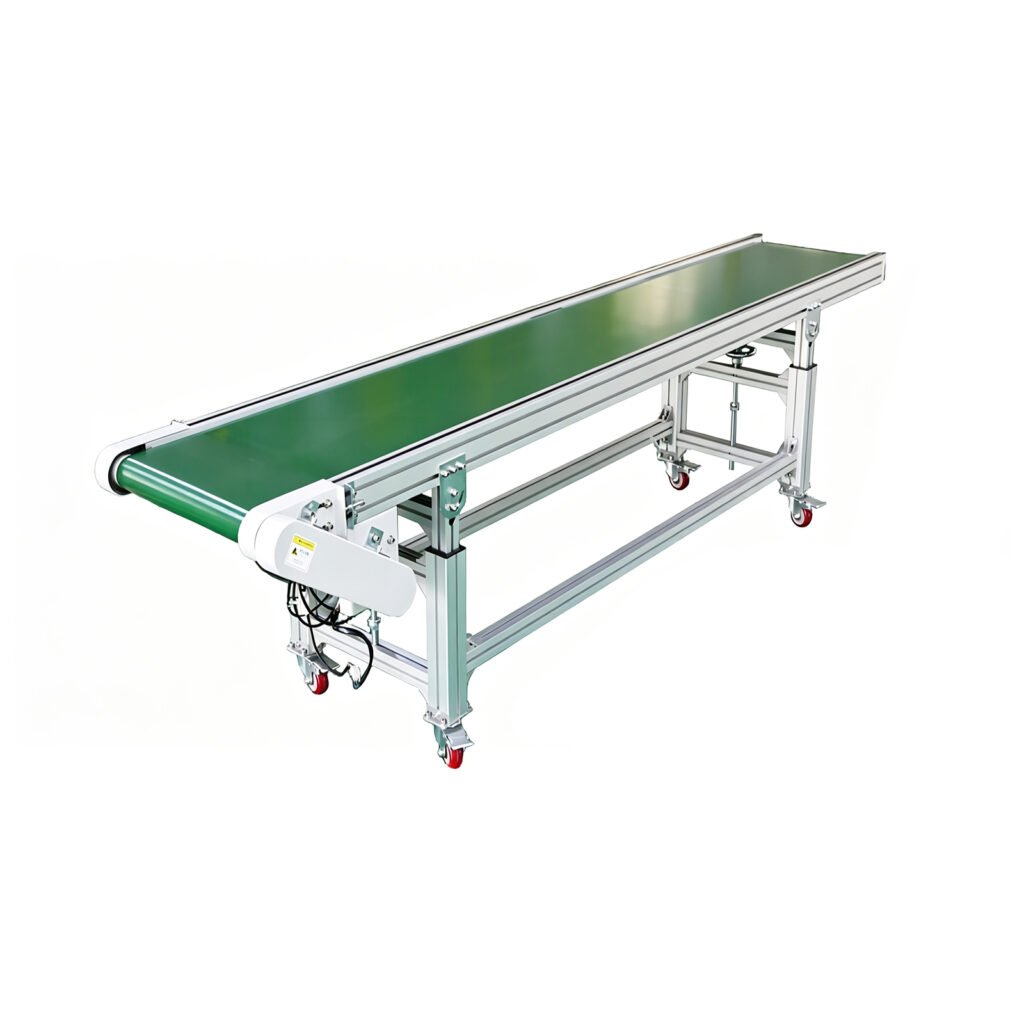
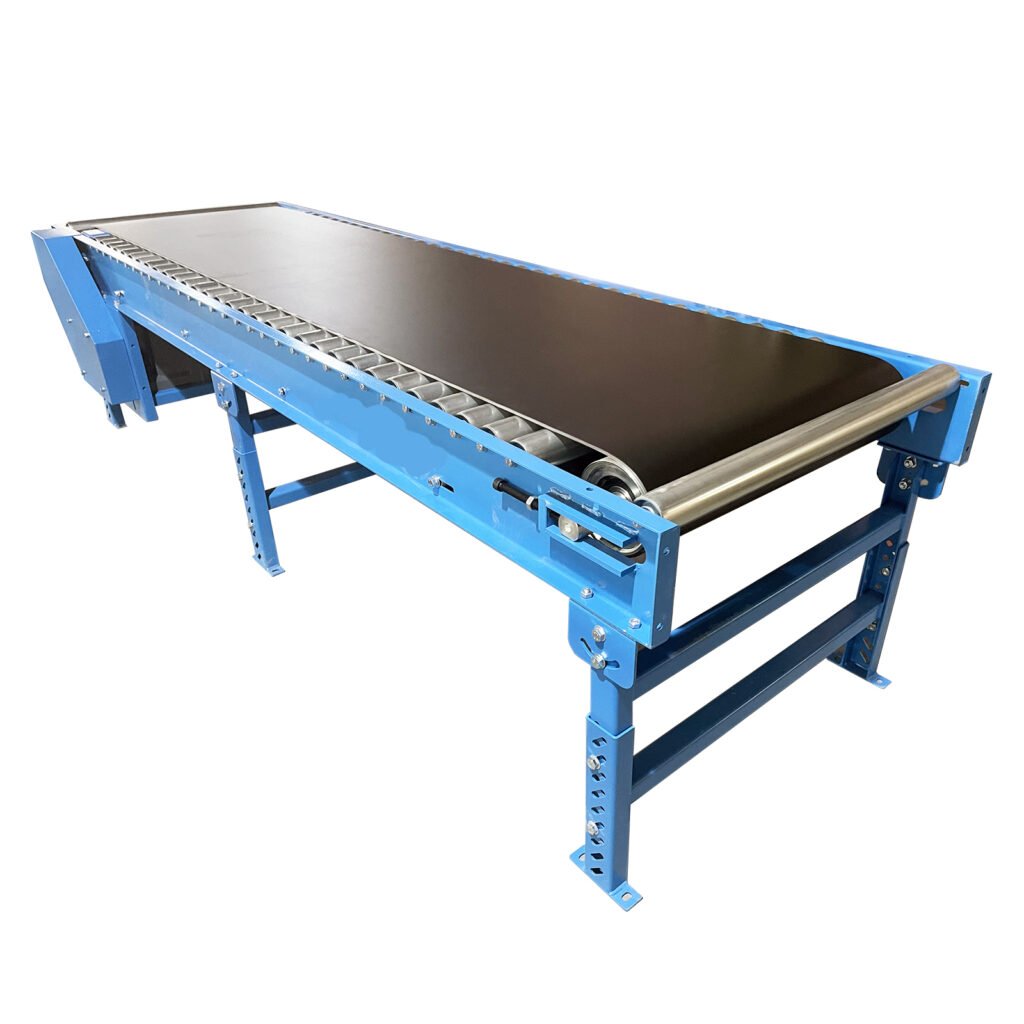
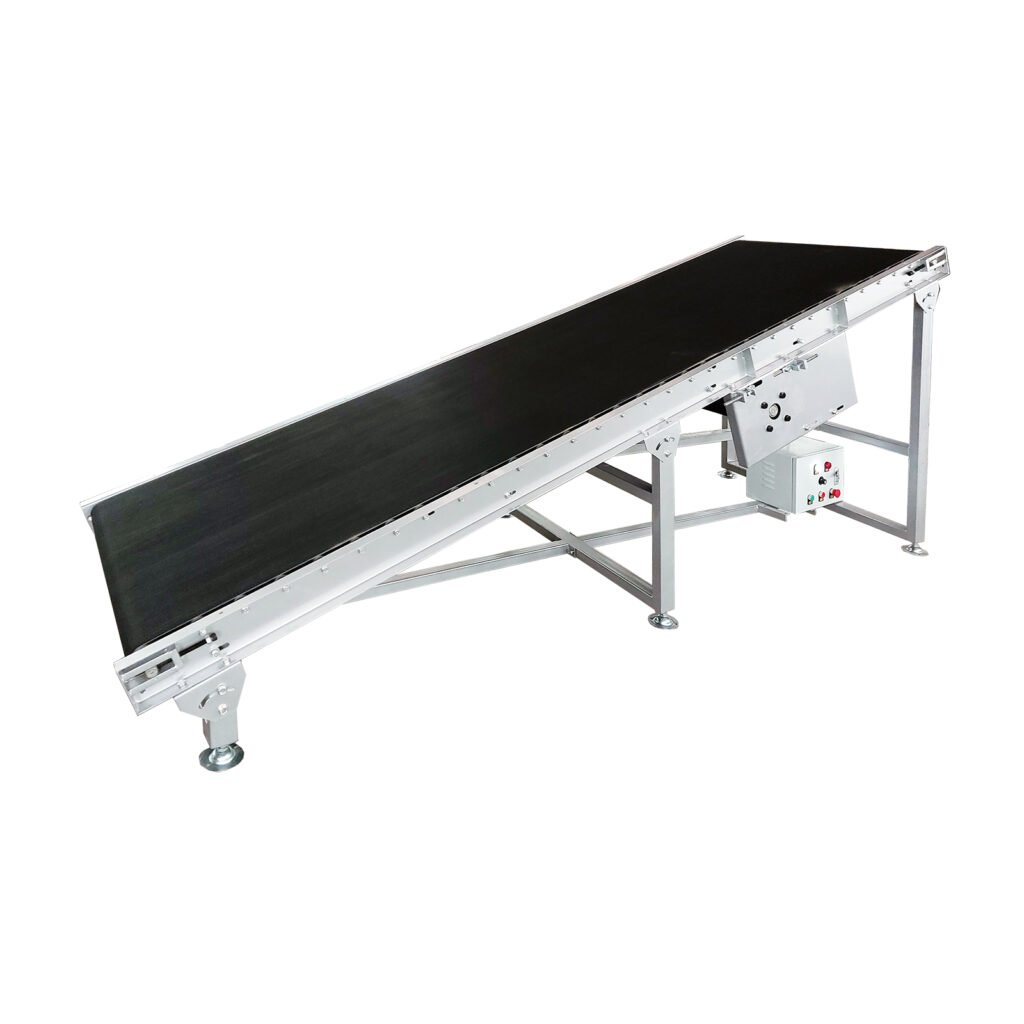
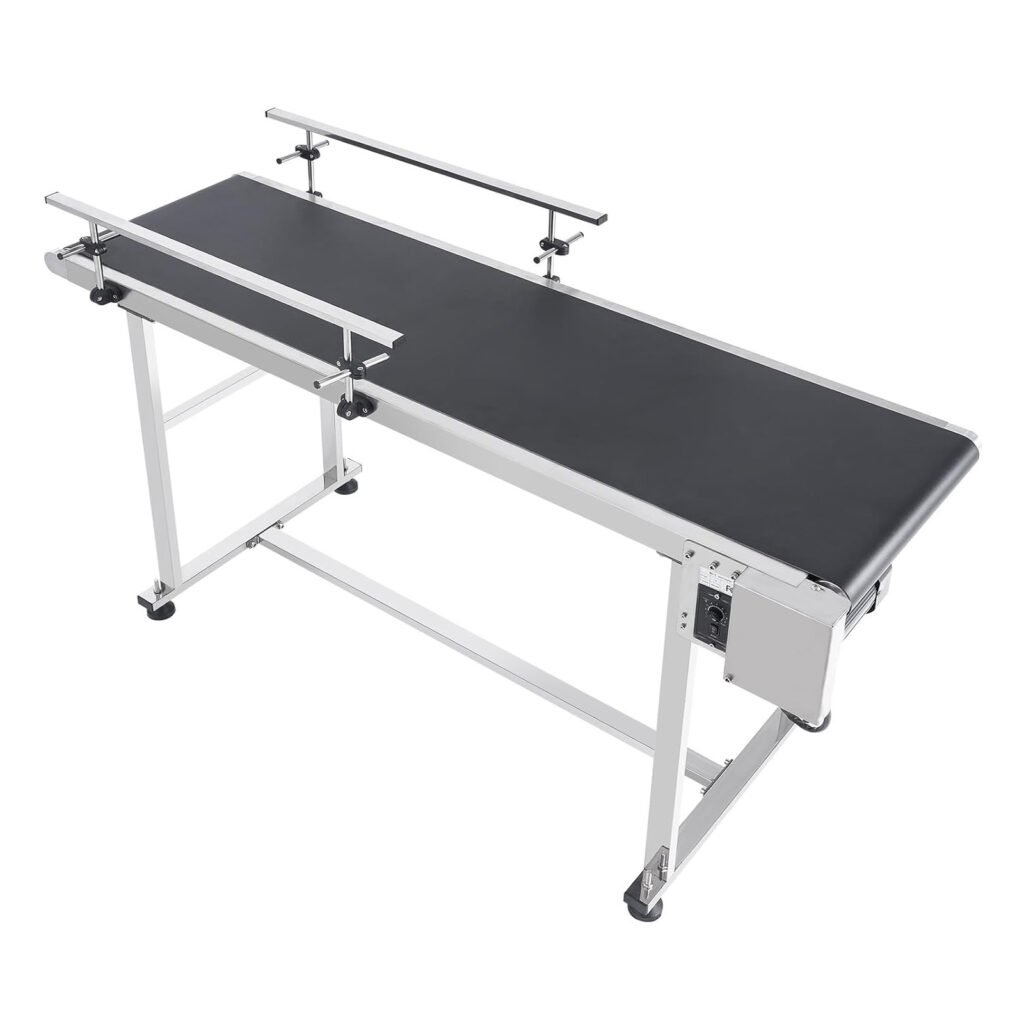
Belt conveyors are your reliable solution to transport goods across long distances and winding, complex routes. They can be seamlessly linked with other automated machines to greatly lift your overall operational efficiency.
•Wide compatibility
Suitable for nearly all types of cargo, ranging from small parcels to oversized bulky products.
•Stable & smooth transport
The soft belt surface prevents items from slipping, tilting or getting damaged during delivery.
•Strong durability
Made with sturdy materials for long-term continuous running and low maintenance costs.
•Flexible layout options
Available in straight, inclined and turning designs to fit different factory and warehouse layouts.

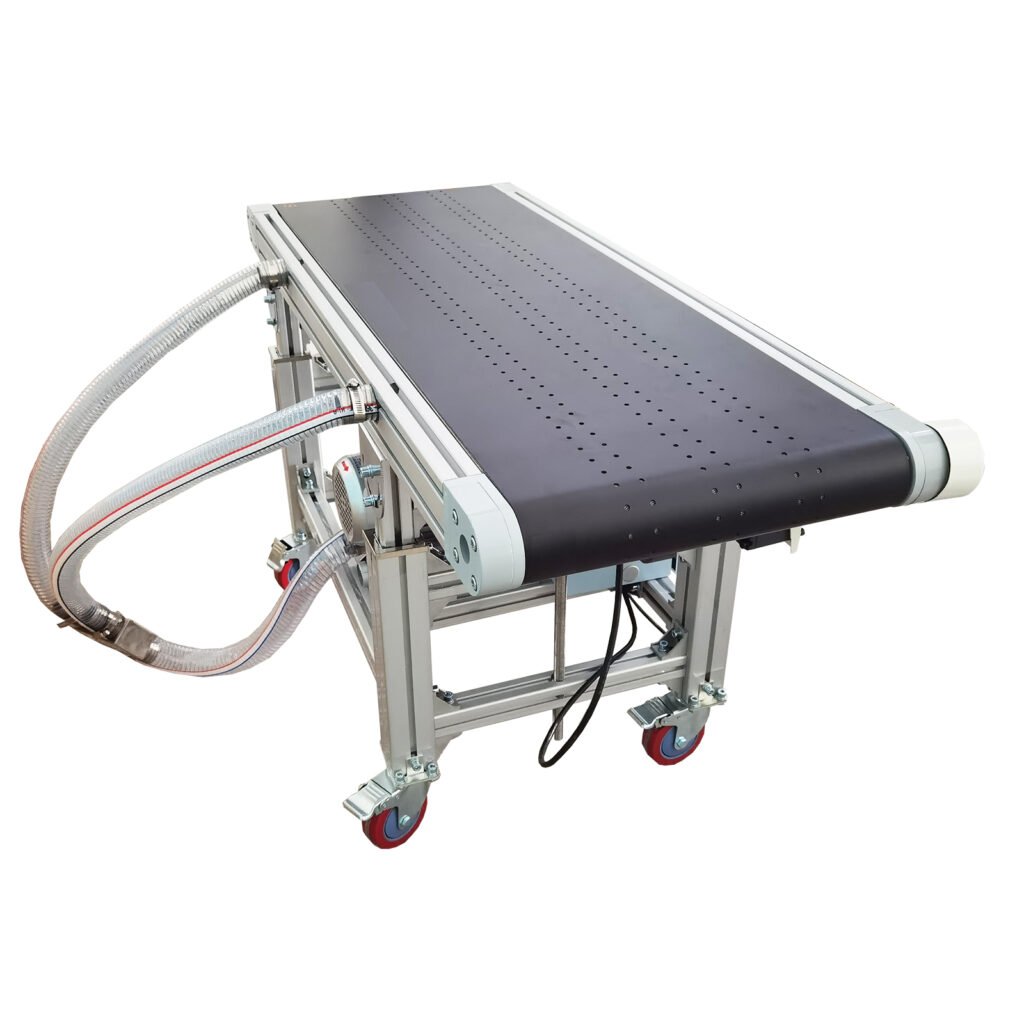
Fixed belt conveyors are permanently installed for steady long-distance transport on production lines and bulk cargo sites.Telescopic belt conveyors can extend and shorten freely, ideal for loading/unloading trucks and containers.Inclined belt conveyors lift or lower items with anti-slip belts to avoid slipping on slopes.Mobile belt conveyors come with casters to move easily between working areas.For different uses, flat belt types handle cartons and packages; anti-skid belts carry loose granular goods. Special versions include food-grade, heat-resistant and oil-resistant belt conveyors. Curved belt conveyors change conveying direction to link multiple assembly lines, and multi-layer models improve conveying capacity for higher efficiency.

BALL TRANSFER CONVEYOR TABLES

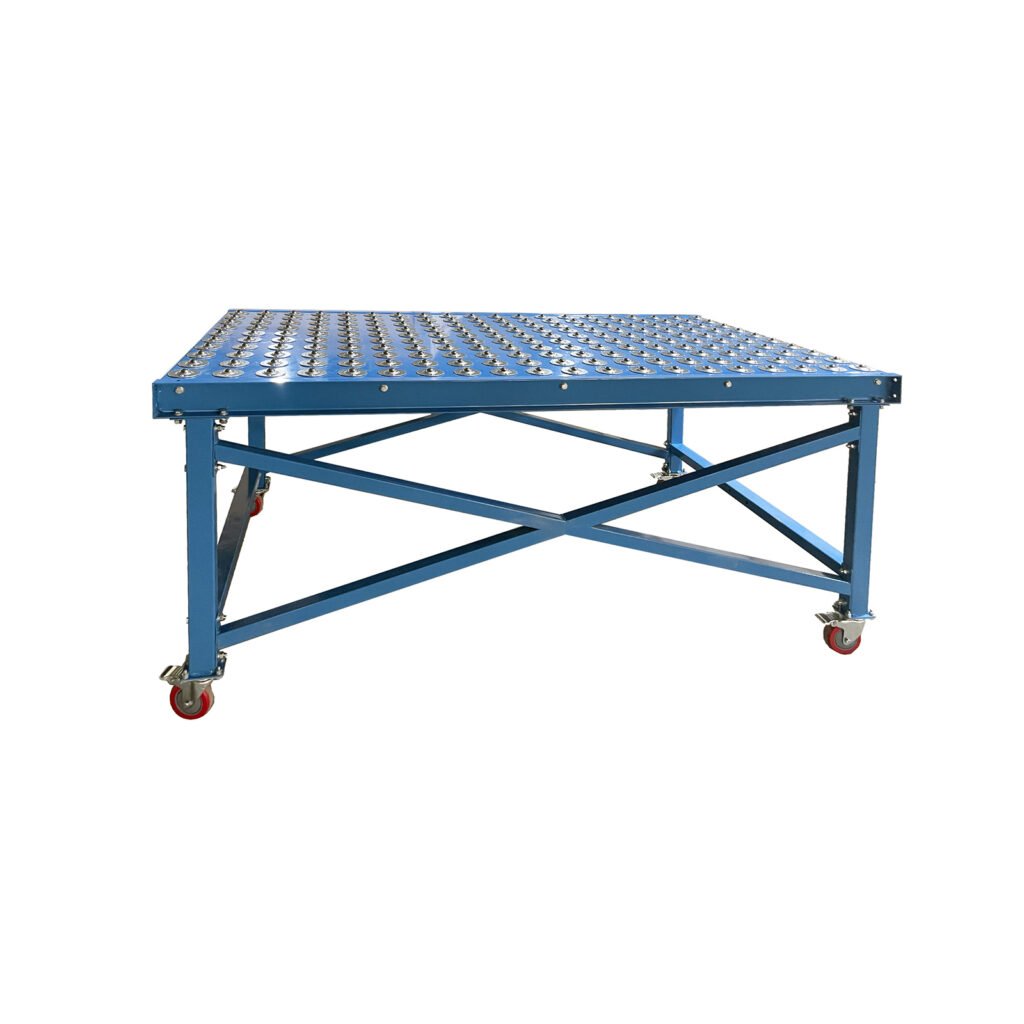
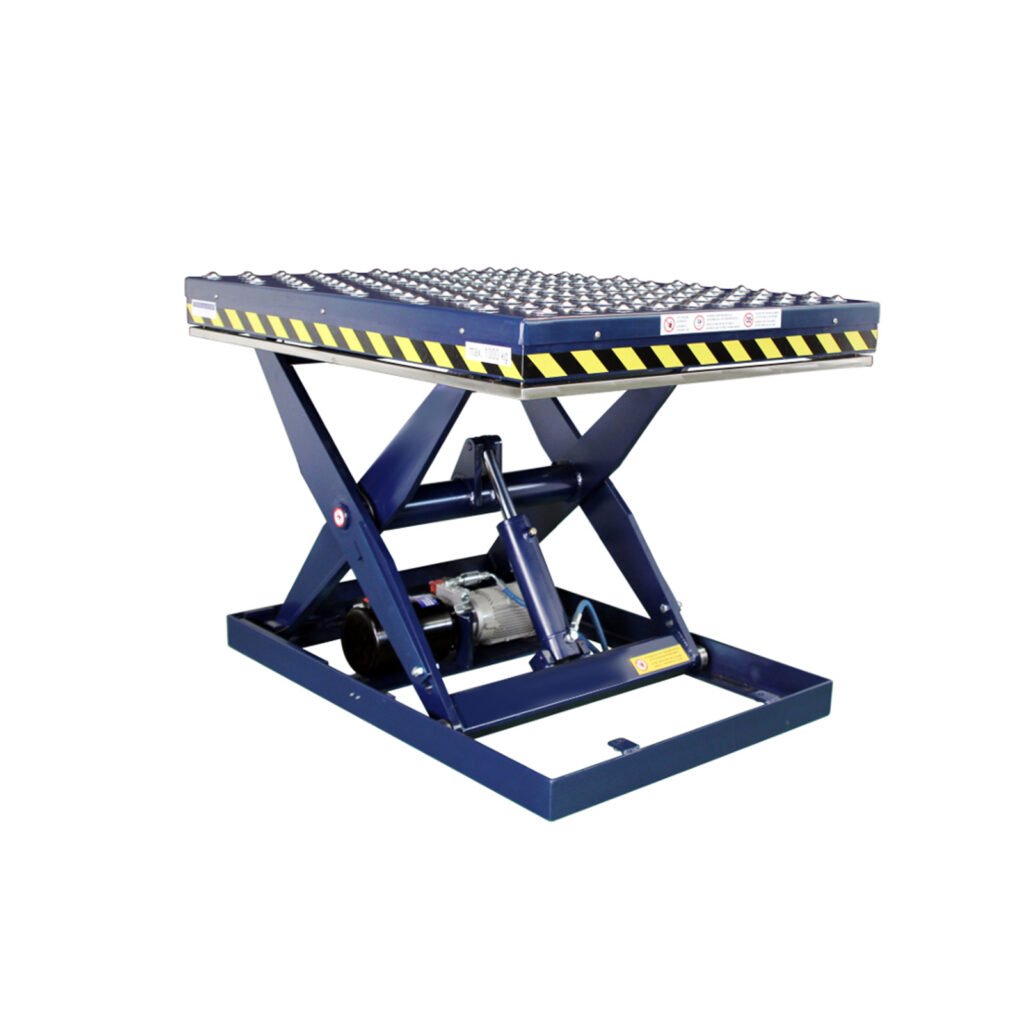
Fitted with UNIVERSAL balls, these work tables let staff shift boxes and workpieces easily in any direction without pushing hard. They are widely installed on assembly lines and packaging workstations for quick manual material handling.
•Omni-directional movement
Goods can slide forward, backward and sideways freely, ideal for rotating and repositioning items during processing.
•Labor-saving operation
Little physical force is needed to move loads, reducing workers’ fatigue.
•Strong load capacity
Supports heavier items better than many common conveyors, suitable for bulky and weighty products.
•Simple structure & easy installation
Compact and durable, they integrate smoothly into production workshops, packing areas and sorting stations.

Conveyors are essential in modern logistics, manufacturing, and warehousing. They’re crucial for improving productivity, safety, and overall efficiency. By selecting the right type of conveyor system and customizing it to meet your specific needs, you can significantly boost your operational capabilities and output. Whether you’re handling lightweight packages or heavy industrial components, there’s a conveyor solution that can help you achieve your business goals. And as always, the team of experts at KevyIndustrial is always here to answer any questions you have or guide you in the right direction.